
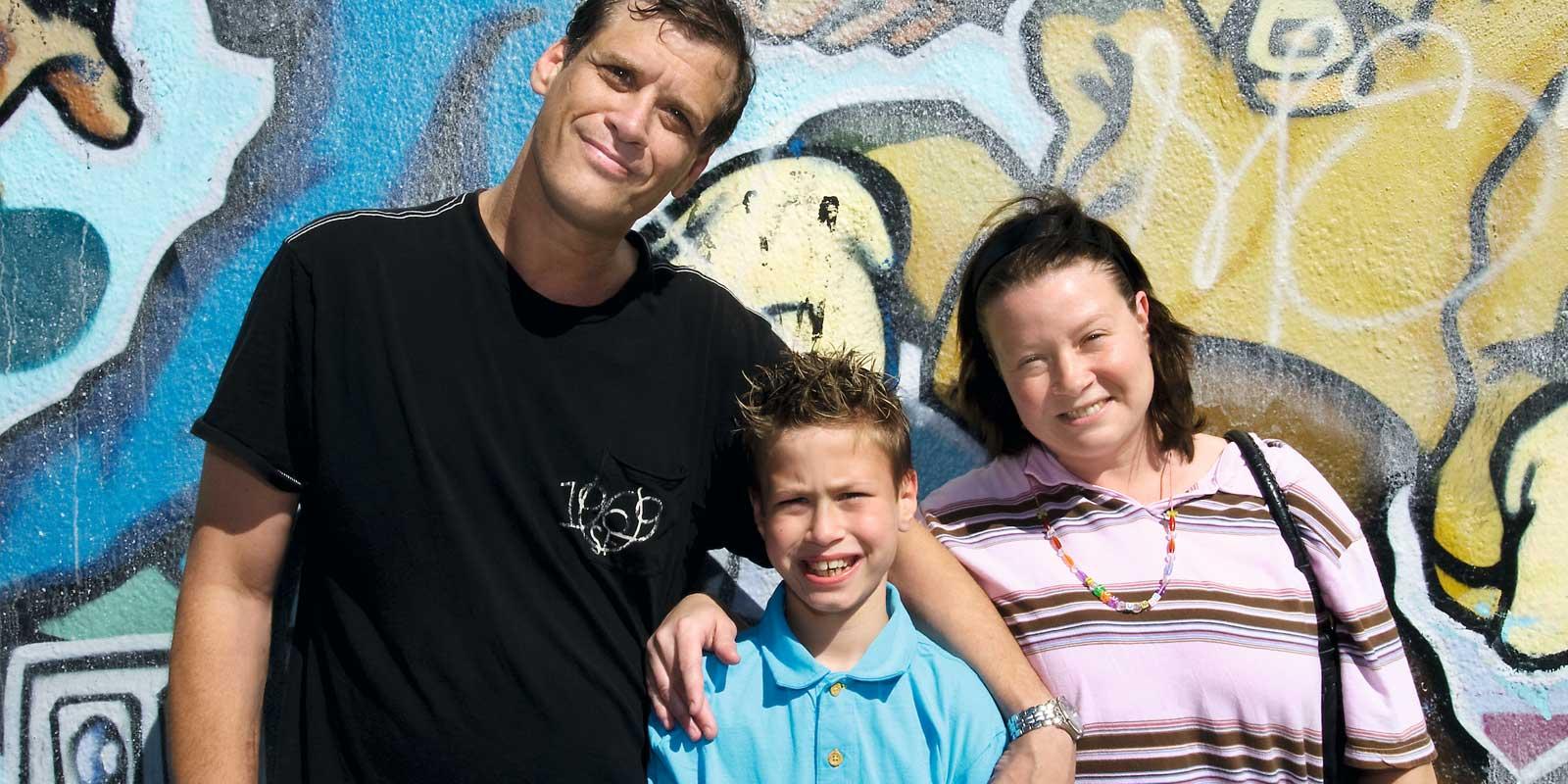


When Nick was seven, he lived in an apartment block that was a notorious hideout for drug dealers and addicts. One night the police raided the building.
Everyone in the building, in all the apartments, was involved with drugs. People went in and out of Nick’s apartment all the time and often passed out on the sofa or the floor.
The people downstairs sold drugs around the clock. Nick’s parents, Michelle and Frank, didn’t sell drugs but they were high most of the time. Doing drugs made them different, Nick felt. Sometimes they just sat or lay still, staring into space. When they woke from their stupor they were usually unhappy. Nick loved his parents but they were always too sick and too strung out on drugs to be able to be his mum and dad. He had to take care of himself.
Foster family
Late one night Nick was woken by shouts and screams outside. People started to run around the corridors, trying to escape or get to the toilet in time to flush their drugs away. After a while, the police stormed into Nick’s apartment and started to shout at his parents. The police had dark vests and guns. Nick’s parents looked terrified. Then the police caught sight of Nick.“You can’t stay here,” said one of the police officers. Nick cried and said he wanted to stay with his parents, but the police officer called a social worker who came to fetch him. Nick didn’t know what was going to happen to his parents. He had to move in with a foster family, a family who get paid to take care of children who can’t stay with their own parents.
Beaten
Nick turned eight at the foster family’s house, but nobody seemed to care. The foster parents had lots of children in the house, children of their own and foster children. The others were older than Nick and treated him badly. They said cruel things and beat him. Nick tried to fight back but they were bigger and stronger. His foster parents didn’t do anything to help him. A while later Nick’s mother went into a treatment centre for drug addicts, and Nick was allowed to visit her there. They cried when they saw each other for the first time and Nick’s mother asked him to forgive her. They chatted and laughed together until suddenly Nick’s mother saw the bruises on his arms./p>“It’s my foster family, they beat me,” said Nick.
Nick’s mother complained to the social workers that had placed Nick with that family, but the foster parents claimed Nick was lying. That he must have fallen. Or that Nick’s mother was beating him. The people in charge believed the foster parents and Nick had to go back to them.
Things got even worse for Nick after that. Everyone was angry with him because he had talked and they beat him even more. By then, however, Nick’s mother had been clean for long enough so she could start fighting to get Nick back for good. Nick was called to court but the first time he saw the judge he didn’t dare say anything about the abuse. His foster parents had threatened him.
“Keep your mouth shut or say that it’s your mom who’s beating you,” they told Nick. “Or else.”
Back to mother
Finally, on the third visit to court, Nick couldn’t take it any longer and told the truth. The judge brought down his gavel and said,“You may move back to your mother.”
Nick was allowed to move to the recovery centre where his mother was fighting to get over her addiction. His dad was at another recovery centre for men. Nick and his mother shared a room with two other mothers and their five children. It was crowded but Nick soon made new friends and things were going well for his mother. She was not only coming off the drugs, but also learning things like how to pay bills and take care of a child. She was learning to live without drugs.
Together again
Both Nick’s parents have now been drug-free for three years. They left the recovery centres long ago, but they still haven’t managed to find a place to live.
“My dream home is a penthouse on the 42nd floor,” says Nick. “My room will be gothic, with black walls and furniture, fluorescent lights and plastic bats hanging from the ceiling. But actually, it doesn’t matter. I don’t care if we live in a cardboard box as long as we’re together.”
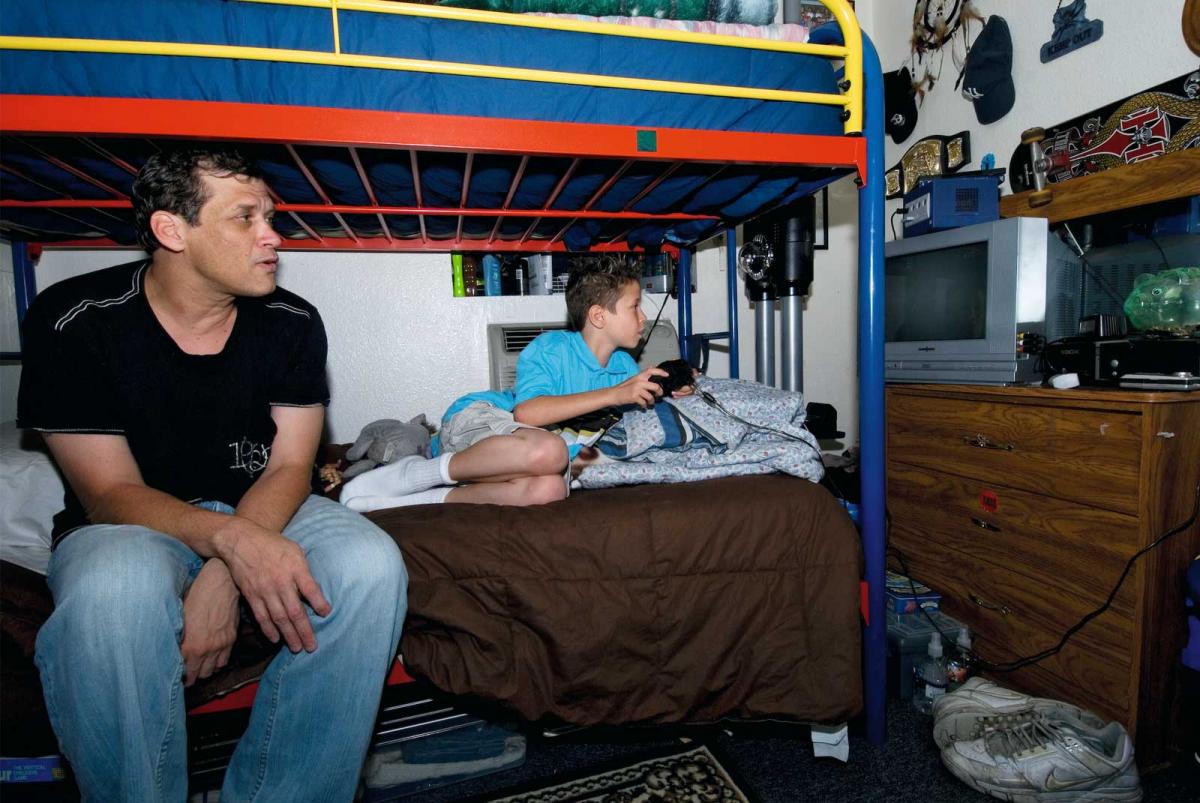
Because Nick and his parents are homeless, they have to live at a motel with lots of other people who are homeless. They pay for a month at a time but they could be thrown out at any time. Nick has had lots of friends who have disappeared from the motel.
“It’s almost impossible to find and keep a best friend,” he says to his parents.
At night, as he is falling asleep, Nick often thinks about everything he’s been through.

“I’m going to write a book about my life because I want to tell people what it’s been like. I survived a lot while I was waiting to get back with my parents.”
“You’re our hero, Nick,” say his mother and father. “We’d never have made it without you.”
Text: Carmilla Floyd
Photo: Kim Naylor

Långgatan 13, 647 30, Mariefred, Sweden
Phone: +46-159-129 00 • info@worldschildrensprize.org
© 2020 World’s Children’s Prize Foundation. All rights reserved. WORLD'S CHILDREN'S PRIZE®, the Foundation's logo, WORLD'S CHILDREN'S PRIZE FOR THE RIGHTS OF THE CHILD®, WORLD'S CHILDREN'S PARLIAMENT®, WORLD'S CHILDREN'S OMBUDSMAN®, WORLD'S CHILDREN'S PRESS CONFERENCE® and YOU ME EQUAL RIGHTS are service marks of the Foundation.